.svg)

.webp)
© Photo credit 2: Maxime DUFOUR
MuMo Collections
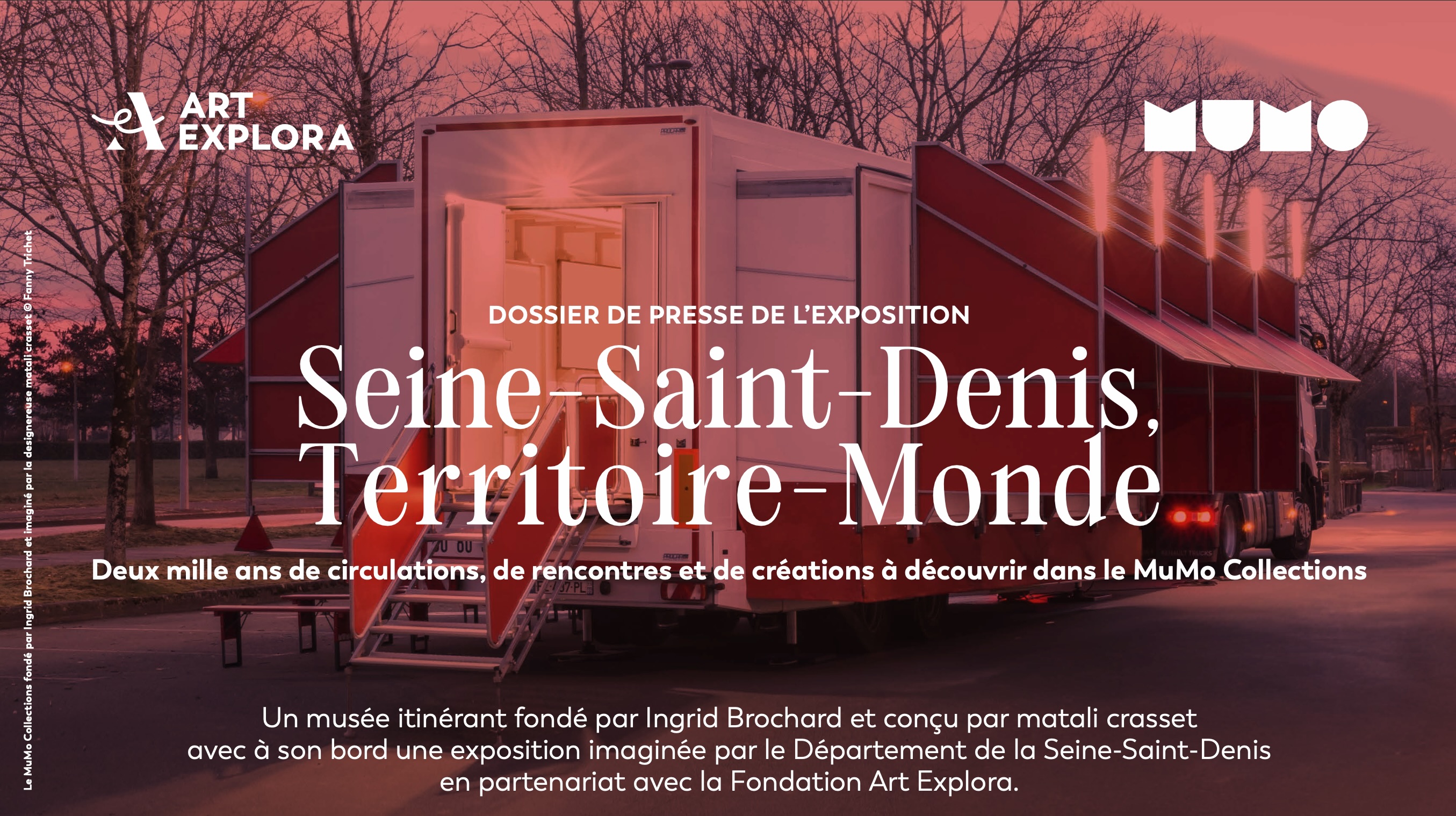
The MuMo Collections museum truck has been traveling the roads of France since 2017 to bring works from the Regional Contemporary Art Funds (Frac), the National Center for Visual Arts (Cnap), and the Departmental Contemporary Art Collections to people across the country.
From time to time, MuMo Collections extends its reach abroad, particularly on the roads of England, transporting works from the collections of the region being visited.
Exhibition: "Seine-Saint-Denis, Territory-World"
An exhibition conceived by the Seine-Saint-Denis Department for the Musée Mobile.
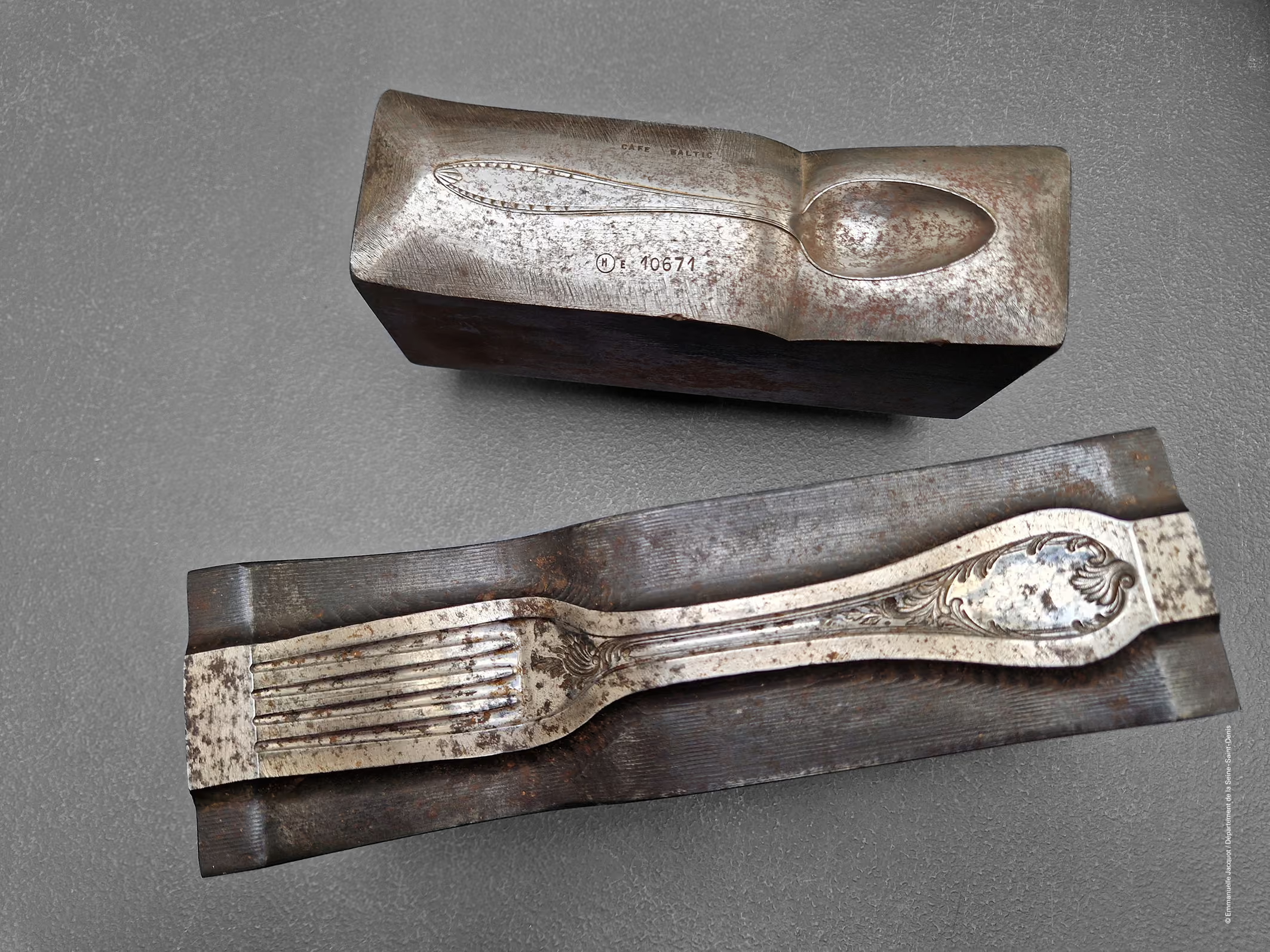
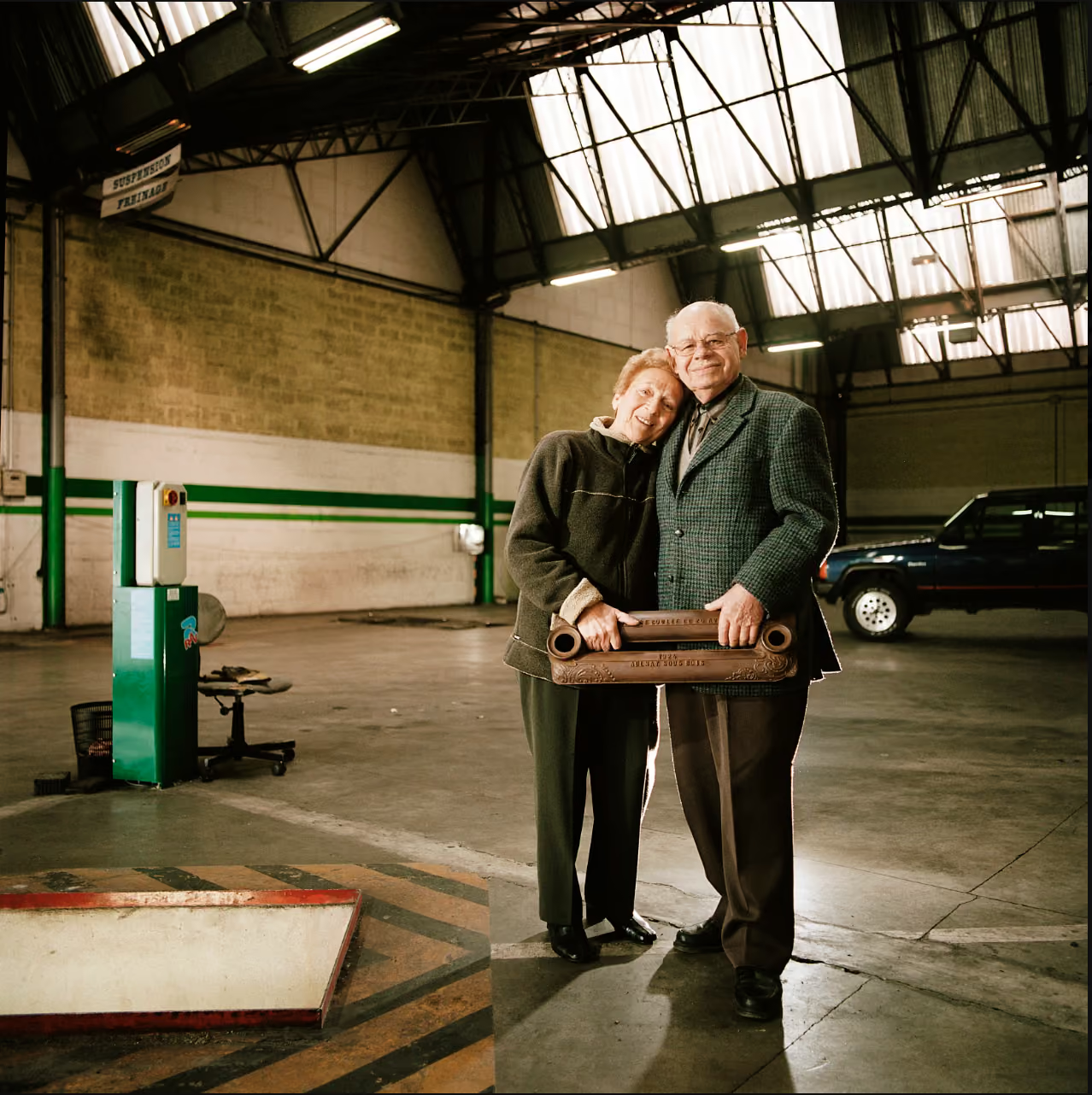
Featuring objects and photographs from the departmental collections of archaeology and cultural heritage and from private collections; photographs and postcards from the departmental archives
; works by Kader ATTIA, Yto BARRADA, Alain BUBLEX, Julien CREUZET, Katia KAMELI, Tania MOURAUD, Daniel NADAUD, Marc PATAUT, and Catherine PONCIN from the departmental collection of contemporary art; and photographs by Éric GARAULT and Willy VAINQUEUR.
For centuries, Seine-Saint-Denis has been a land of passage, encounters, and creativity. Located at the crossroads of major trade and travel routes, it has evolved in step with movement, migration, and exchange. Men and women from diverse backgrounds have lived, worked, and invented new ways of life and culture here. From this dynamic history have emerged rich and varied heritages—both tangible and intangible—that today reflect the region’s unique identity and its cultural vibrancy. Discover this global region through its history, its landscape, its cultures, and its residents.
The exhibition invites visitors to discover Seine-Saint-Denis as a “world-region,” shaped by exchanges, migration, and creativity. The exhibition highlights a rich and constantly evolving identity, as seen through the eyes of its residents. It explores the region’s history, its connections to the world, and the richness of its heritage and cultures.
Photos

.avif)
.avif)
.avif)
Itinerary

Will a truck be passing through my area soon?


Presentation of the museum-truck

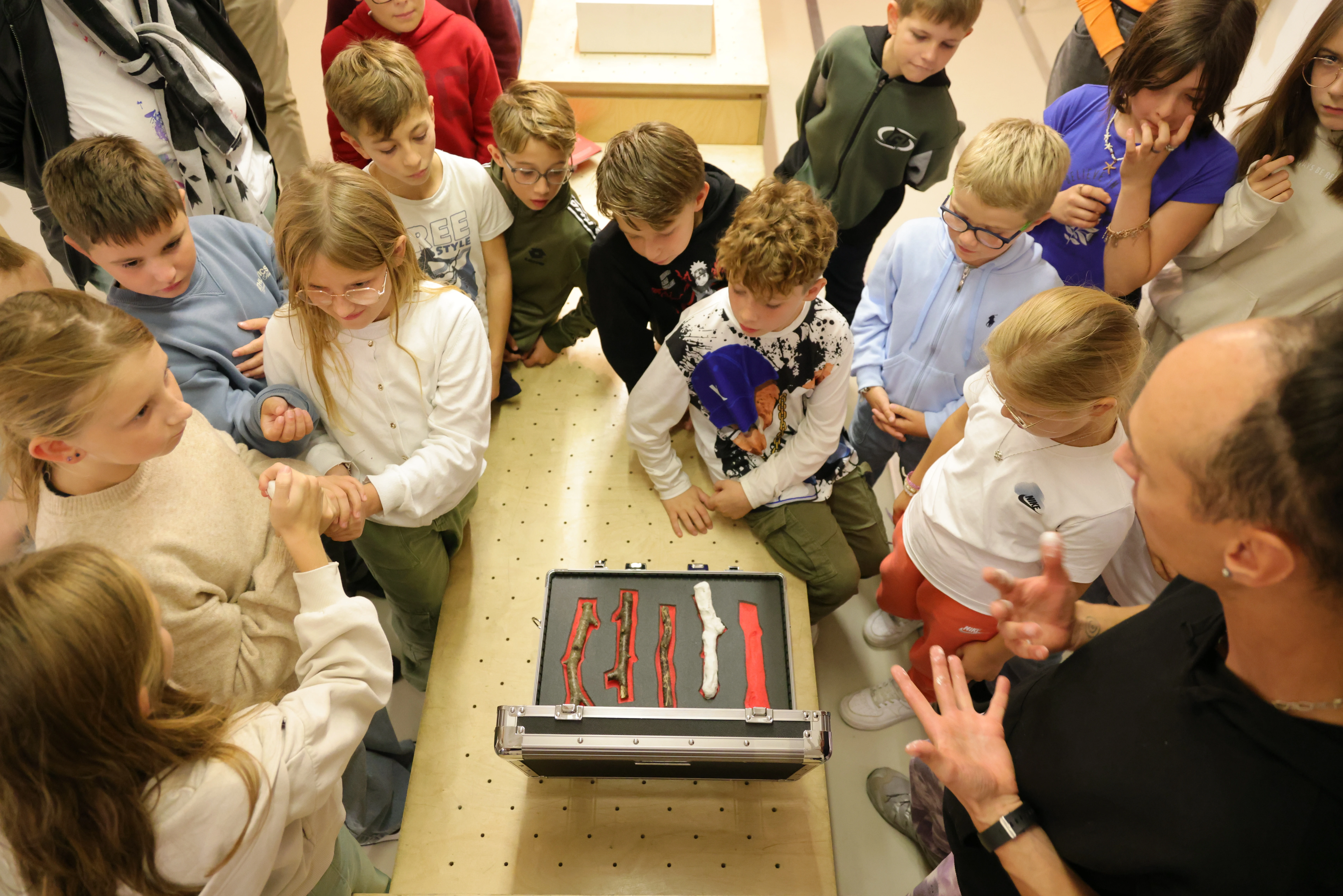
Regional mediators accompany these exhibitions, which are new to the area, to create opportunities for discovery, hands-on engagement, and sharing with local residents. Training sessions, tours, open houses, art workshops, and exhibition openings are organized weekly for approximately 500 participants.


Interview with designer matali crasset
What inspired you to design this new traveling museum?
matali crasset: I like to work on things that don't exist, to find new logics and insert life into them, or more precisely, living together. The idea was to create an intermediary space between the exhibition space dedicated to contemporary art and the outdoor space, so as to create hospitality and conviviality around the expanding truck. Like a circus that arrives on the village square and gives it a double reality, the truck magically opens up and doubles in size. Wings spread out on either side to protect outdoor workshop and exhibition areas, where visitors can settle in before or after their visit.
How did you imagine this space?
m.c.: I wanted to encourage something fluid and easy to implement. The additional outdoor spaces I propose open up at the same time as the truck. After that, all that's left to do is combine the seats. As for the interior, I wanted to transform the truck's standard universe into a warm and welcoming place. Some of the works will be placed and hung in the middle of the showroom, in the "workbench" area. It's not just a display tool: you can open drawers or take things out during your visit. This system encourages mediation that listens carefully and adapts to the dynamics of each group. On either side of the workbench, on the walls, we enter the world of the "cabinet of curiosities". The idea here is to show lots of little things, with a certain richness and diversity, so that artists and works of art can coexist.
What does the challenge of mobility mean to you?
m.c.: The challenge with mobility was to start with a standard truck and give it both the potential for spatial expansion and a touch of magic. The vertical expansion of the first MuMo may have created something even more extraordinary, but I like this idea of horizontal expansion for MuMo Collections. It’s like opening a door, reaching out to people, and inviting them in. This commitment to accessibility had to be visible from the outside.



.avif)